5 KEY FACTORS THAT DETERMINE THE DURABILITY AND LOAD-BEARING PERFORMANCE OF DINOSTAR ALUMINIUM HYDRAULIC DOOR SYSTEMS
In high-end developments such as restaurants, hotels, office buildings and shopping centres, entrance doors are more than just architectural finishing elements. They must also meet demanding requirements for durability, load-bearing capacity and continuous operation.
For hydraulic door systems, these requirements are addressed through the integrated combination of aluminium profiles, tempered glass, hydraulic hinges and specialized hardware. Each component serves a specific function, working together to create a robust door structure that operates smoothly and ensures safety throughout its service life.

1. Large-Format Aluminium Frames
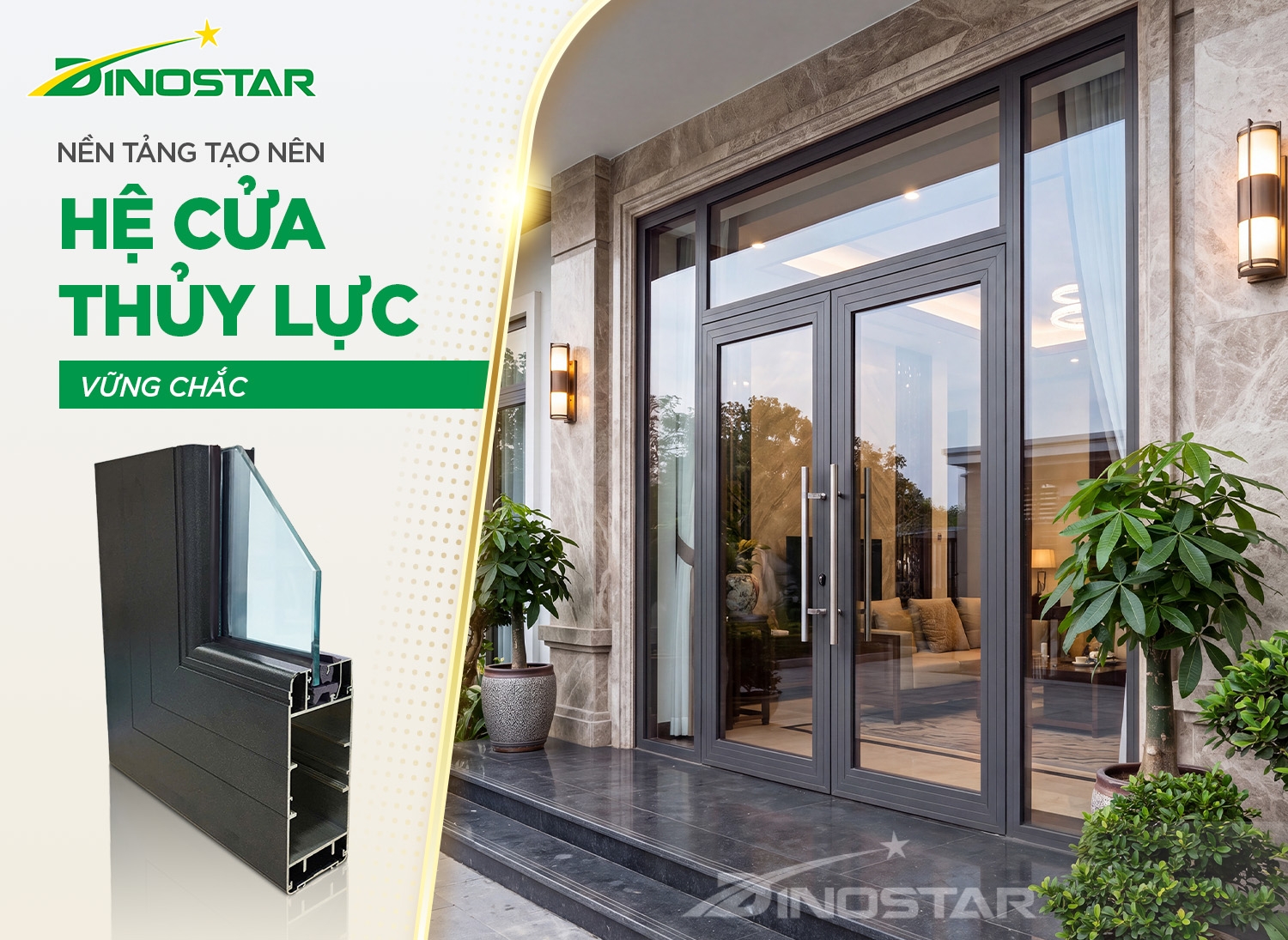
The aluminium frame forms the primary structure of the door, defining its dimensions and connecting the various components of the system. For hydraulic doors, the large-format frame design not only creates an impressive, luxurious appearance but also meets the structural requirements of premium door systems.
Dinostar hydraulic door systems use aluminium profiles with thicknesses ranging from 1.8–2.5 mm. Wall thickness is one of the important parameters influencing the mechanical properties and deformation resistance of an aluminium profile. When combined with an appropriately engineered cross-sectional design, these profiles provide a solid foundation for door fabrication and assembly.
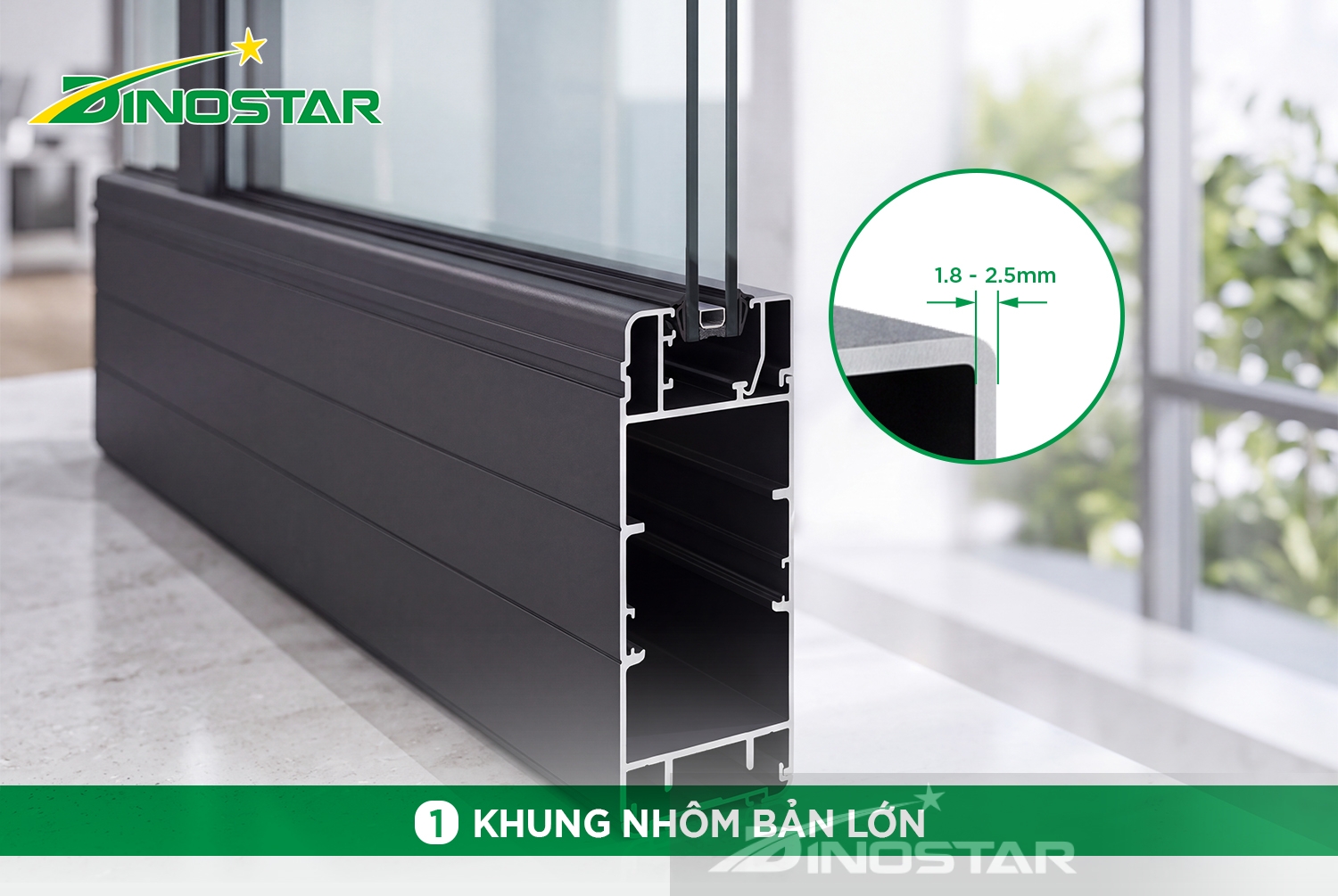
In particular, profile quality should be evaluated based on a combination of factors, including alloy composition, aluminium wall thickness, cross-sectional geometry and machining precision, rather than relying on any single specification.
2. Tempered Glass
Alongside the aluminium frame, glass occupies a significant proportion of the door area and directly influences both its structural characteristics and overall appearance.
Dinostar hydraulic door systems use tempered glass with a minimum thickness of 10 mm, meeting durability and safety requirements for glass door applications.
The thermal tempering process gives tempered glass greater resistance to stress and thermal shock compared with ordinary glass of the same thickness. When broken, it tends to fragment into smaller pieces, reducing the risk of serious injury compared with the large, sharp shards typically produced by ordinary glass.
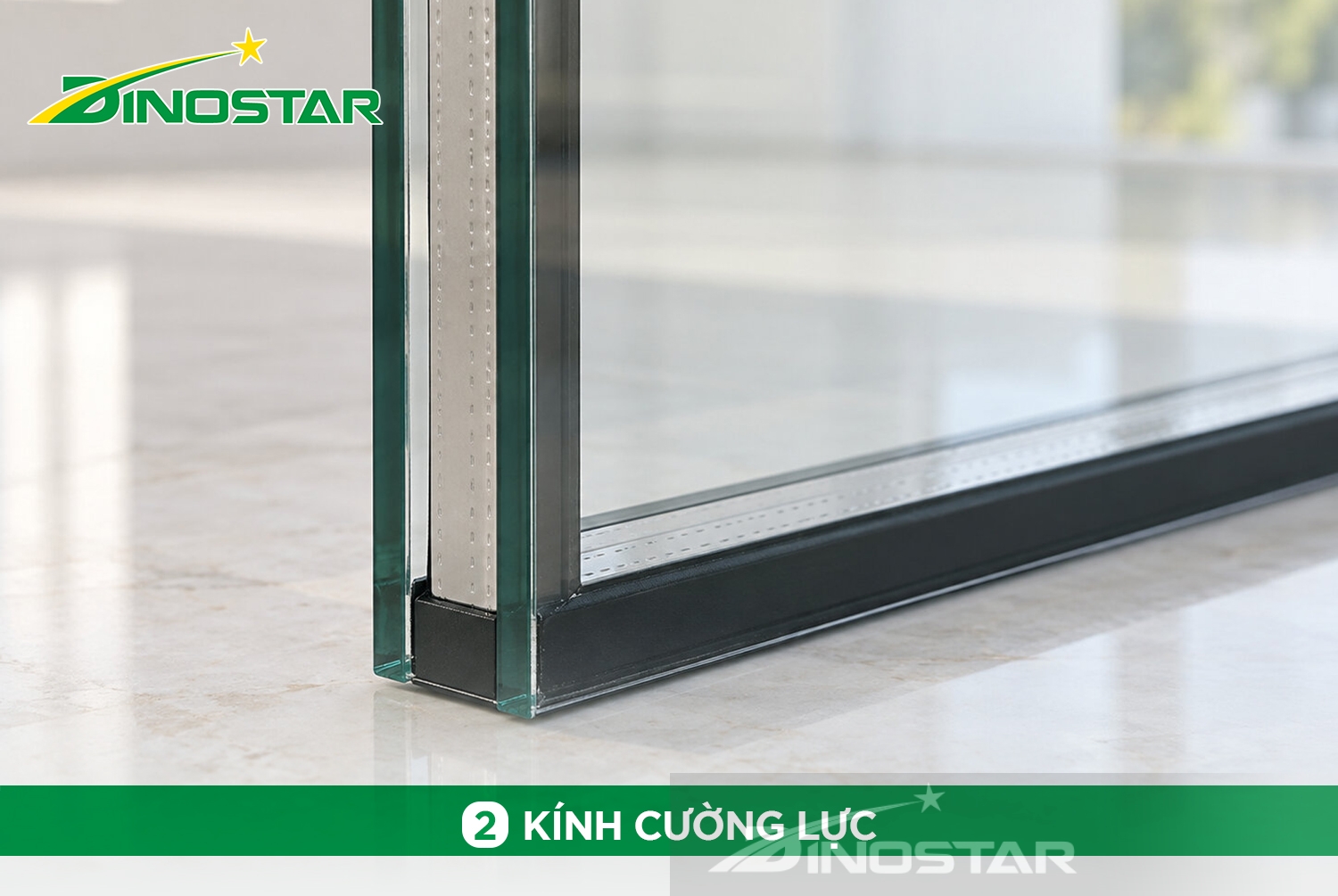
The combination of large-format aluminium frames and tempered glass creates a solid, durable door structure while preserving the advantages of natural light, wider views and seamless spatial connections.
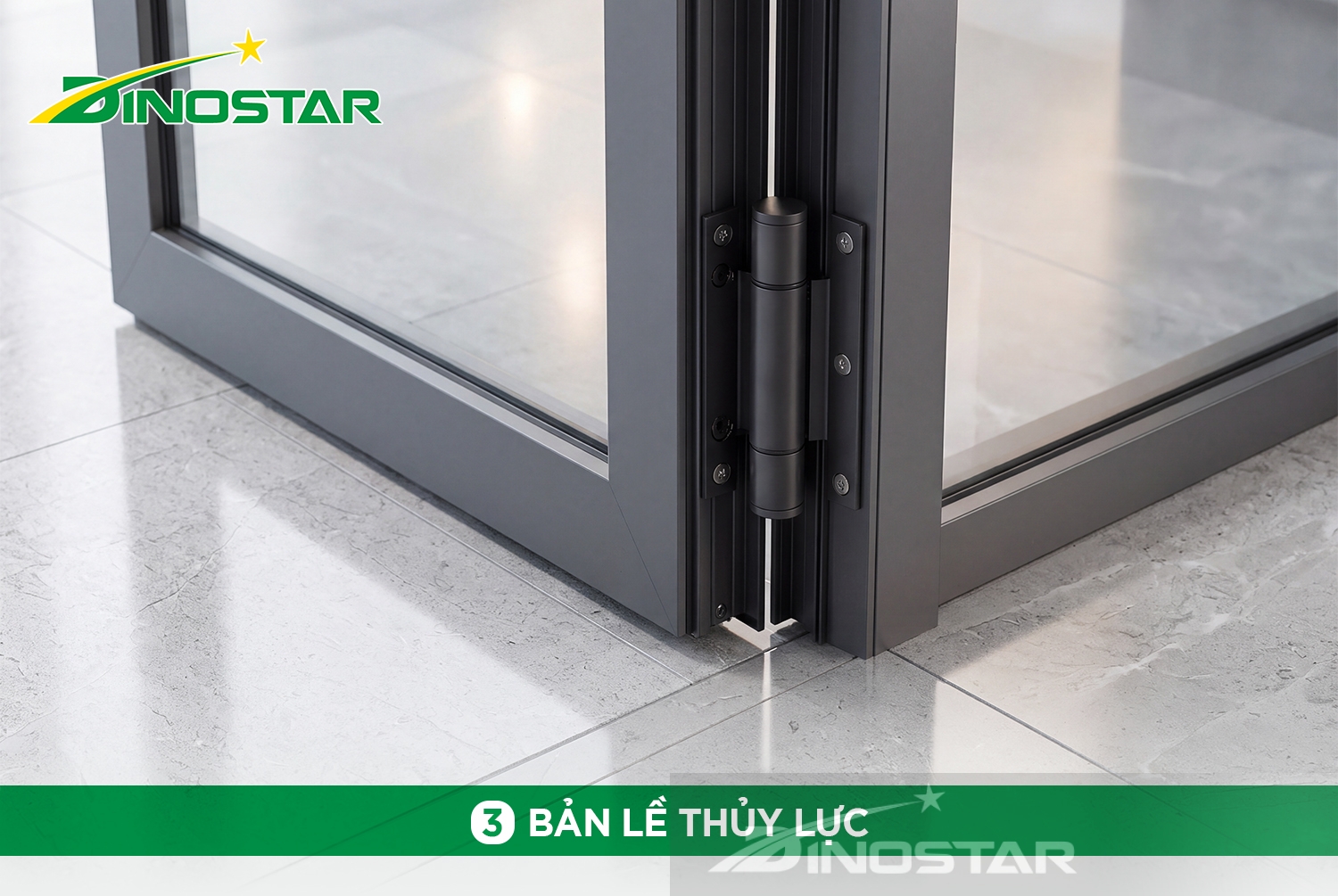
3. Hydraulic Hinges
Unlike conventional door systems that use standard hinges, hydraulic doors operate through a controlled-motion mechanism powered by hydraulic hinges.
Inside each hinge is a spring mechanism combined with an oil-based hydraulic damping system. When the user opens the door, energy is stored in the spring mechanism. Once released, the spring works together with the hydraulic oil control system to regulate closing speed, allowing the door leaf to return to its original position smoothly while minimizing impact.
This component plays a vital role in the overall user experience, particularly in high-traffic environments such as hotels, restaurants and offices.
The selection of hydraulic hinges must be compatible with the door leaf’s weight, dimensions and frequency of use to ensure stable and reliable operation.
4. Integrated Hardware System
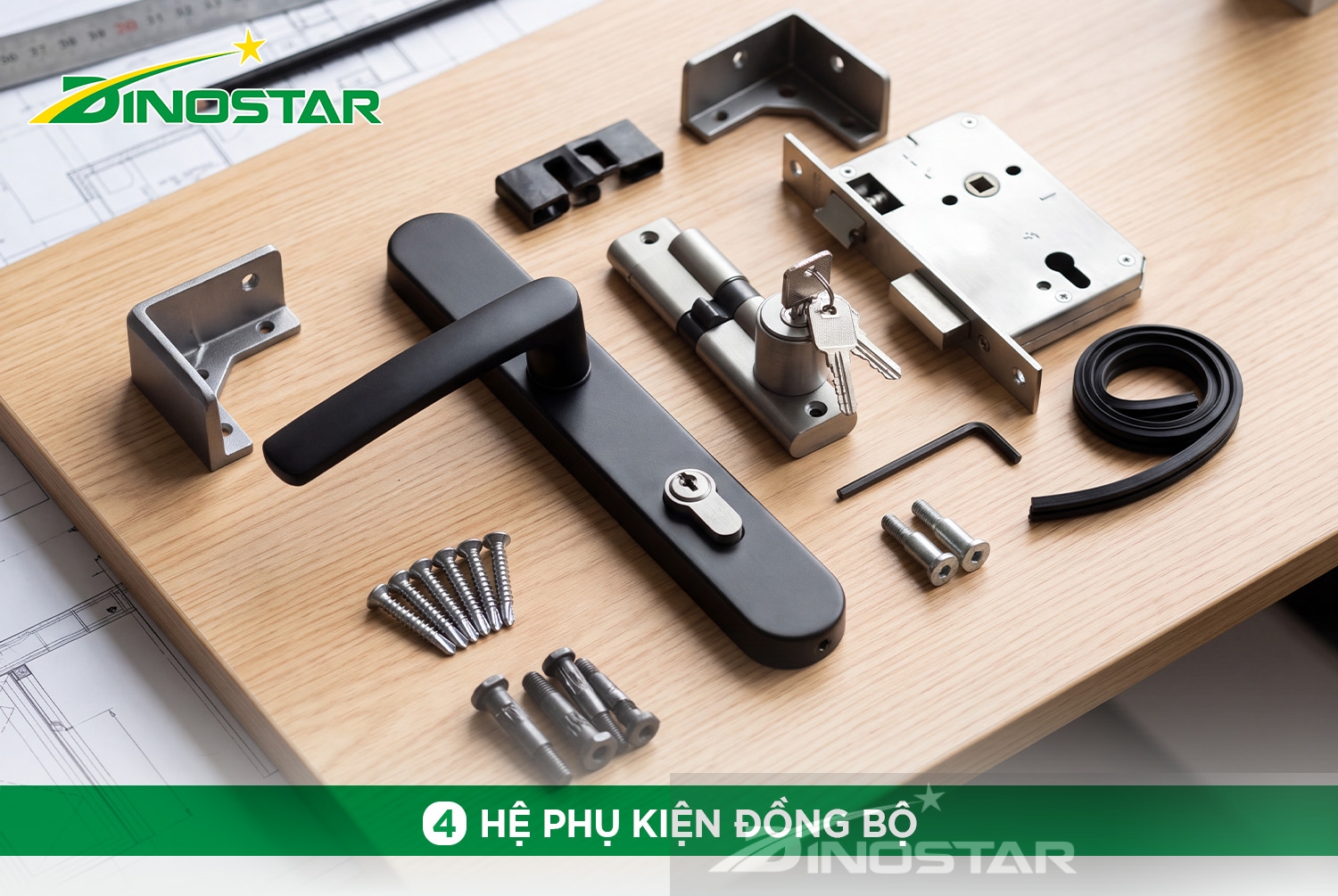
A high-quality door system depends on more than just its aluminium frame and glass. Accessories such as handles, locks, screws and connecting components also play essential roles in assembly, operation and security.
For Dinostar hydraulic door systems, accompanying hardware is selected with a focus on high quality, structural compatibility and long-term performance.
Key components include:
- Handles: Provide convenient operation while adding a distinctive aesthetic detail.
- Door locks: Control access and help secure the enclosed space.
- Screws and connecting components: Secure and connect individual parts, ensuring structural integrity during assembly.
- Hydraulic hinges: Control opening and closing movements, supporting smooth and controlled door operation.
Compatibility between hardware components and the overall door construction is essential for minimizing operational issues and maintaining long-term performance.
5. Integrated System Performance – The Key to Overall Door Quality
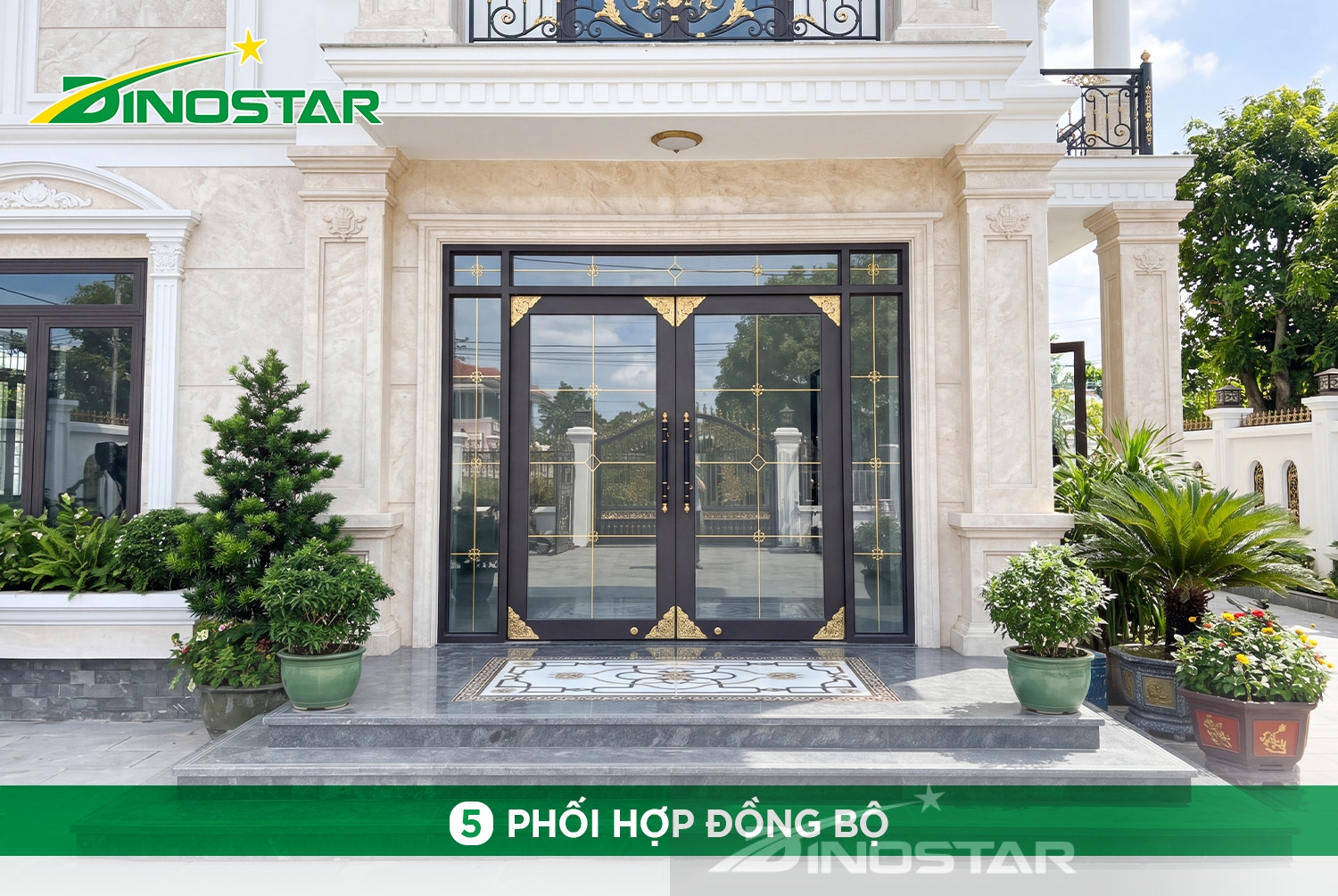
The durability and operating performance of a hydraulic door do not depend on any single component. They result from the coordinated performance of the entire system.
The aluminium frame must have an appropriate structure to support and connect with the glass. The glass must meet the required dimensions and thickness specifications. Hydraulic hinges must be selected according to the door leaf’s weight, while all hardware components must be compatible with the overall design.
In addition, fabrication, installation and adjustment techniques directly affect the door’s stability throughout its service life.
It is the integration of materials, structural design and hardware that defines the value of a premium hydraulic door system, meeting the combined requirements of durability, safety and aesthetics.
Dinostar Aluminium Hydraulic Door Systems – Structural Strength, Smooth Operation
Developed for high-end construction projects, Dinostar Aluminium hydraulic door systems combine large-format aluminium profiles with thicknesses of 1.8–2.5 mm, tempered glass with a minimum thickness of 10 mm, and specialized hydraulic hinges and hardware.
Beyond their sophisticated appearance, these systems are designed to deliver robust construction, good load-bearing performance and smooth opening and closing mechanisms.
They provide an architectural solution that enhances the overall appearance of a space while meeting increasingly demanding expectations for quality, safety and user experience in modern buildings.